Research and development of new materials play a critical role in high-tech industries and the upgrading of traditional industries. Combining the scientific principles of physics, chemistry, and mathematics with applications in electrical, mechanical, chemical, energy, and environmental engineering, materials science and engineering is a prominent interdisciplinary field balancing theoretical foundations and engineering applications. Established in 1940, NCKU MSE is the earliest academic department in Taiwan dedicated to cultivating materials technology talent, with the mission of nurturing elite professionals in materials design, production, and research.
Tracing back our history, the department evolved from the Department of Electrochemical Engineering, to the Department of Mining and Metallurgical Engineering, the Department of Mineral, Metallurgical and Materials Engineering, the Department of Materials Engineering, and finally renamed the Department of Materials Science and Engineering in 1992. To facilitate long-term growth, the department established the Nanotechnology and Microsystems Graduate Doctoral Program and the International Advanced Materials Program (IAMP) in 2012, followed by the Graduate Program in Green Applied Materials in 2020. Thanks to the decades-long dedication of our faculty and students, our research culture and academic achievements hold a leading position in Taiwan, contributing significantly to the domestic high-tech industry.
We boast a pragmatic tradition, a superior learning environment, and a strong faculty portfolio. Our research spans traditional and advanced materials, including metallic materials, ceramic materials, polymer materials, composite materials, optoelectronic and electronic materials, biomaterials, energy materials, magnetic materials, high-temperature superconductors, surface treatment technologies, advanced materials analysis, and computer-aided materials science.
To respond to rapid global shifts and industrial updates, while supporting NCKU's quest as a top international university, the department continuously promotes curriculum restructuring, equipment modernization, and internationalization, matching the standards of top-tier educational and research institutions worldwide.
Curriculum Planning
The department's curriculum is broadly divided into theoretical studies and hands-on experiments. The theoretical curriculum covers three main areas: materials science theory, processing, and application. (1) Materials Science Theory includes Introduction to Materials Science, Introduction to Crystallography and Diffraction, Crystal Structure and Defects, Materials Thermodynamics, Introduction to Phase Transformations, Engineering Mechanics of Materials, Mechanical Properties of Materials, Engineering Mathematics, Introduction to Quantum Physics, Introduction to Solid State Physics, Semiconductor Materials and Devices, Materials Analysis, Organic Chemistry, and Introduction to Polymers. (2) Materials Processing includes Iron and Steel Metallurgy, Extractive Metallurgy, Surface Engineering, Non-ferrous Materials, and Micro/Nano Device Fabrication and Design. (3) Materials Application includes Electrochemistry, Heat Treatment of Metals, Introduction to Biomaterials, Energy Applications of Advanced Materials, and Semiconductor and Display Technologies.
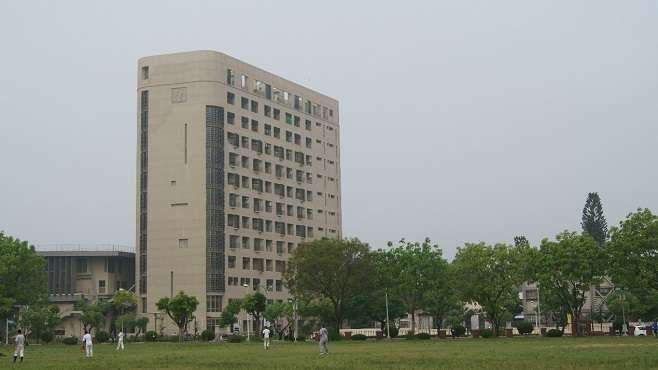
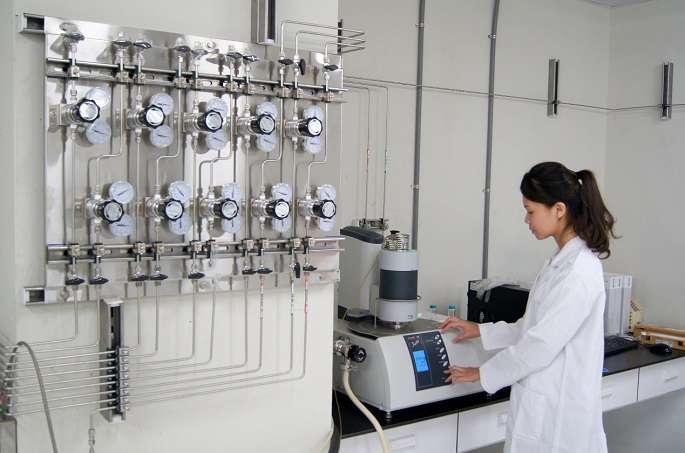
The hands-on curriculum includes Materials Experiments and Undergraduate Thesis Research. We provide students with comprehensive lab training to foster professional talents with extensive practical experience. To align with international high-tech industries, the department recently redesigned undergraduate laboratory courses and invested in state-of-the-art equipment, providing over 330 square meters (100+ ping) of experimental space in our new department building, which is premier in Taiwan. The lab course covers three major materials domains: metallic materials, optoelectronic materials, and ceramic materials.
Metallic Materials: Sponsored by China Steel Corporation (CSC), this lab features manual and microcomputer-controlled precision cutters, electric hydraulic hot mounting presses, metallographic microscopes, stereo microscopes, single-disc grinders, and vibration polishers for sample preparation and analysis. We also introduced electron backscatter diffraction (EBSD) analysis into undergraduate lab courses for the first time in Taiwan, enabling students to study crystallography on real machines.
Optoelectronic Materials: Integrates MEMS, semiconductor fabrication, and materials synthesis/characterization, allowing students to practice raw material preparation, device fabrication, and property testing in a cleanroom environment (photolithography, etching, coating, heat treatment).
Ceramic Materials: Features precision balances, ball mills, high-temperature furnaces, tube furnaces, hydraulic tablet presses, Archimedes density testers, impedance analyzers, and magneto-optical Kerr effect (MOKE) measurement systems for electronic ceramics fabrication and physical properties testing.
Academic Research
As the cradle of metallic materials professionals in Taiwan with a history of over 50 years, the department's research covers a wide range of fields including metals, ceramics, polymers, composites, thin films, nanomaterials, and functional materials. These are applied in semiconductors, electronics, optoelectronics, biomedicine, and clean energy, focusing on the analysis, design, development, and application of material properties and microstructures. We feature an outstanding faculty team comprising 29 full-time professors (18 professors, 6 associate professors, 5 assistant professors), 8 adjunct professors, and 3 visiting professors.
Campus Life
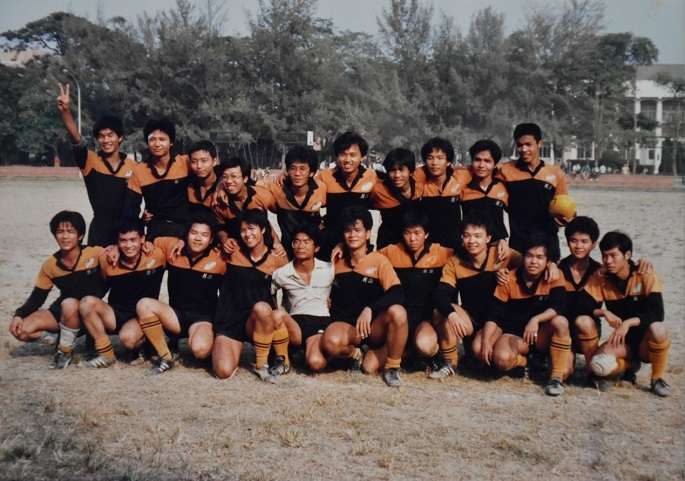
Upon admission, students are assigned full-time professors as mentors to guide them through professional course selection, career planning, and daily life counseling. The undergraduate program features a 'family system' that vertically connects senior and junior students, fostering a warm community. Beyond university-wide clubs, campus life revolves around the Student Association and sports teams. The Student Association organizes annual events such as Orientation, Farewell, Lantern Festival Gathering, Materials Week, and Materials Camp. Sports teams including rugby, baseball, softball, basketball, badminton, and table tennis actively participate and win awards in inter-collegiate competitions. As the oldest materials department in Taiwan, NCKU MSE has a tight-knit community. Alum often return to share industry trends and career advice. Annual alum reunions, recruitment fairs, forums, and academic conferences provide students with a rich and professional campus life.
Scholarships
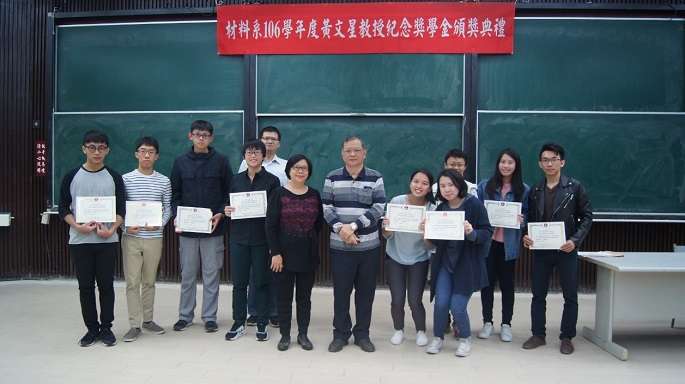
With our long history, many retired professors and alumni return to support the department out of gratitude for the education they received. Alumni and retired faculty provide numerous scholarships, including the Professor Wen-Hsing Wang Memorial Scholarship, Professor Ju-Tung Lee Memorial Scholarship, Professor Kuang-Hua Yu Scholarship, Professor Ming-Pan Hung Scholarship, and Professor Yi-Lin Cheng Memorial Scholarship, to support the next generation. Successful alumni frequently donate to upgrade teaching facilities, fund academic activities, and support student financial aid.
Future Career
The vast majority of our undergraduate graduates choose to pursue advanced graduate degrees, study abroad, or enter the industry directly. NCKU MSE graduate alumni enjoy an excellent reputation and a high employment rate. Leading high-tech electronics, steel manufacturing, clean energy, manufacturing, engineering sectors, and research institutions prioritize recruiting our graduates. With a history of over 80 years, our alumni are widely distributed in academia, steel manufacturing, oil refining, electronics, and medicine, many serving as CEOs and senior executives. MSE alumni are well-known for team collaboration and mutual support in the industry, making NCKU MSE one of the most favored sources of talent for major employers year after year.